
Gotta Start at the Beginning
Okay, this is a long, endless topic in TTRPG gaming circles. I know. I’ve engaged in quite a few of those arguments (on both sides!), and I wanted to touch on it today because it recently became an issue – specifically, I was running Fate Core (my own choice, in fact, I’d lobbied hard for it) coming off a Genesys Shadow of the Beanstalk short campaign. Thought I wanted something more “character focused” because we were doing an historical fiction game, and based on conversations we had in our Genesys game (which is a pretty traditional medium crunch game with special dice, once you get down to it). We did characters quickly (five people, all new to Fate, in about an hour, so pretty good – with all the attendant bad jokes, chatter, and questions about how things worked).
We did that first session (3 hours). Played fine, players had fun, but for me, the GM, I found it extremely hard to run. Not because I hadn’t run Fate Core before – this was my 6th or 7th campaign using it; I know it backwards and forwards. But it was different this time, and I think now, a total mismatch in a certain, specific way (the crux of this post!). It wasn’t because the rules didn’t work – they were fine, and as said, players grokked them quickly. The game did everything I had wanted it for (to wit, to have players be able to define themselves with Aspects as roleplaying prompts, to codify things like sidekicks and using the Fate Fractal to denote things like their court faction and all right mass combat rules). Should have been a perfect fit. Wasn’t.
In this case, and the topic of today’s post, I want to explore why that is. My current thesis, if you will, is that the Fate Core game, when rolling dice and adjudicating things, didn’t really give me enough information to say what was or wasn’t happening. The background of the rules also didn’t really “inform” my adjudication, for lack of a better term. I needed details the game couldn’t give me, by design. I mean, I knew that going in (and technically “easiness” it what I’d chosen it for, what my players had even asked for). I believed I could just fill in those details from my head and my research. I was very, very wrong. By the end of the session I was mentally exhausted, and even had a headache. I’d felt this before, after certain sessions, so it got me thinking.
The issue is crunch. Or in this case, the lack of it. But also certain crunch (not all crunch is the same!). So I’d reframe this as details that need to be made up vs. details the system generates for you. It’s weirdly specific I grant, but I think it really touches on what was bothering me when I ran it. Basically, Fate was incapable of generating or providing certain details which I, as a GM, find useful when talking about things.
Let me give an example. The Fate Core mass combat rules (via the wonderful System Toolkit) gives you a pretty decent system to run mass combats; following the Fate Fractal, you treat military units like characters: you give them Skills and Aspects, and even a Consequence or two. You know exactly how they work because they work like everything else in a Conflict, with a few extra rules (mostly about what Leaders/PCs can do there). But…
You know what those rules don’t care about? The size of your force. Do you have 300 heavy cavalry or 1000? For these rules, it doesn’t matter (unless you, the GM, decide it does via, say, the Scale optional rule, and even then, you’ll need to decide how many whatevers mean the next Scale level; you need to make those thresholds. Also, the game doesn’t really say what happens when a unit is injured (i.e. takes a Consequence). Do you lose half the unit? The whole thing if it has a single Consequence? Some percentage?
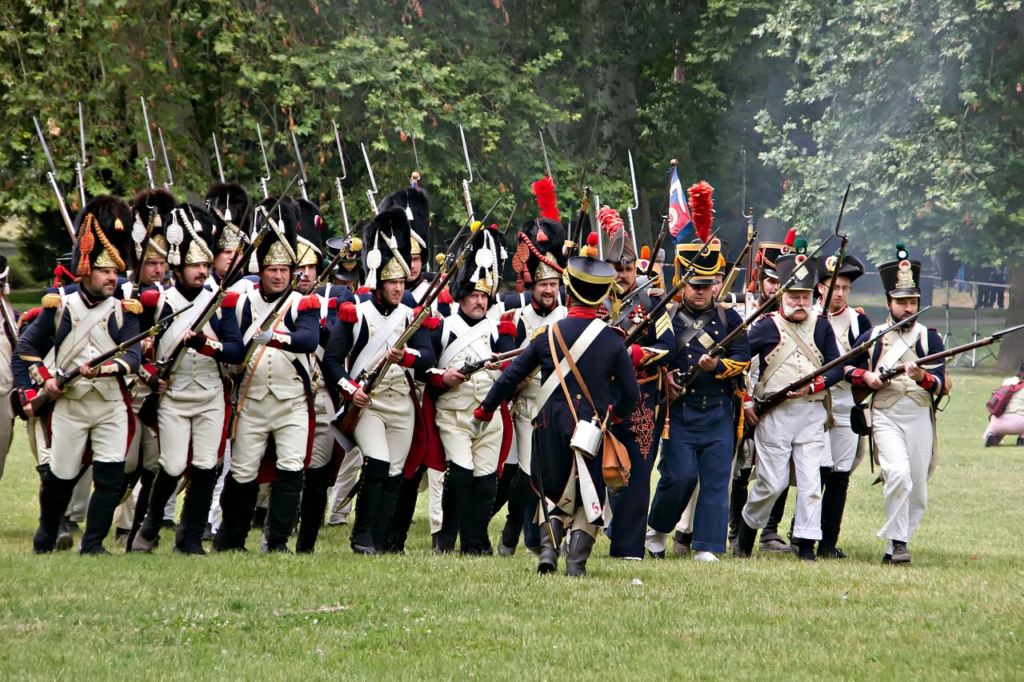
(Seriously guys, size matters!)
While it’s okay to handwave that, at some point, my players at least will ask – how many troops did we lose? How long does it take to recruit and replace them? What’s their combat effectiveness (stats) now? Fate doesn’t touch those things (because it doesn’t want to and isn’t made to), but it made me feel weird. I ALSO wanted those answers, because they were vital to the next step – what should the PCs do? Chase after the other army? Are we strong enough? How hurt do we think they are? Or for my NPCs? I had a game once where my NPCs were accidentally victorious (I’d made their army weaker than the player army but three bad decisions and disastrous rolls later, there it was). Logically, holding to the game setting and verisimilitude, what made sense now? What should the NPC commander do?
And maybe that’s where more crunchy games win for me. They help me roleplay the NPCs. Yes, there’s much more to keep track of, and often, more to prepare for a session (I was doing some prep for our switch to Burning Wheel actually before writing this post). This takes time. There’s more to adjudicate, and procedures to follow. And yet…for all that, I find it easier to run. Because of the extra crunch, I had enough extra detail to hang my hat on, which helped my thinking.
I’ll give one more weird example. Had a bog-standard fantasy game I was running in Savage Worlds (specifically because their mass combat rules are pretty good and quite fun). However, game was missing something; players felt it too, and I said let’s switch to GURPS. When I started replanning that game, I kept trying to decide how much troops, “realistically”, the PCs would have; what made sense? I could decide myself (that’s what I’d done for the Savage Worlds game, after all, for the three sessions we played before switching). But on a lark, I used the Realm Management supplement for GURPS to figure out the size of the military forces for the enemies around the PCs, and their own army. This fixed a lot of things in my head once I had some concrete benchmarks to work with. Realistic? Probably not at all. But eminently useful.

(So what I’m saying is, can you boil all of medieval economics down to like, one number? Please?)
Now, this isn’t to say all crunch is equal. As I said, I like crunch that helps me describe and adjudicate, that helps me build the world in my head so I can describe it to players. For example, I’m not terribly in love with the crunch in combat of some versions of D&D and Pathfinder – I find fiddling with Feat interactions, and what they do from round to round, exhausting. Whereas GURPS and Burning Wheel (both of which I’ll surely write about at some point on this blog) feed me the sort of detail that gets my brain going. So BW ended up the game I’m running now because it combined my original goal (something character centric) with the detail I needed.
One last thing before we end. In some circles, a lot of this debate centers around how much work it is to run more crunchy games, and people just being busy as you get older (spouse, kids, more work, more responsibility, etc. etc.). I had a kid (but they now have left the nest, alas), still have the spouse (who still lets me game), and yes, much more responsibility, but, I don’t know, I seem to be handling it. Now, this could simply be a function of knowledge (I know GURPS and BW quite well at this point), but I find that the planning and world building decision-making necessary for both games makes me do work up front, but quite a bit less when actually running, and smaller prep in between. It’s odd, since there IS prep in between, but it feels handleable. When I ran a campaign of Blades in the Dark, I weirdly felt there wasn’t enough homework for me to do! Turns out I enjoy that stuff too, as part of the hobby.
So anyway, I hope this helps some of you! It took me quite a bit of time to put my finger on why I gravitate towards crunchier games, and almost always end up cutting my lighter games short, and coming back to the heavier stuff. And, I can’t say enough, nothing is wrong with light and medium crunch games; I’ve run plenty of them and had good fun. But for the longer term, it seems I need a bit more crunch to enjoy the game.
As always, there are more articles that I’ve written, which you can have a look at here: Articles
Leave a Reply